About Us
Less noise.
More substance.
LESS & MORE LIMITED is an IT company focused on designing, building and maintaining software. Our name describes the approach: less complexity, fewer moving parts, and more of what actually helps a business run.
01Focus
Software that earns its place.
We work on custom applications, web platforms, cloud infrastructure, integrations and quality assurance. The common thread is software that people depend on every day and that has to keep working after launch.
We prefer understanding a problem well over adding features quickly. Often the most valuable outcome of a discovery phase is deciding what not to build.

02Approach to technology
Tools serve the problem.
We choose technologies based on the team that will maintain them, the lifetime of the system and the constraints of the environment — not on trends. Where a well-supported standard solution exists, we use it. Where something custom is genuinely needed, we build it carefully and document why.
03Working principles
Clarity before code
We write down what a system should do and why before deciding how it will be built.
Small, reviewable steps
Changes are delivered in increments you can see, test and question.
Boring where it counts
Proven tools for critical paths; experimentation where the risk is contained.
Honest estimates
We explain uncertainty instead of hiding it behind a single number.
Ownership stays with you
Code, infrastructure and documentation live in accounts you control.
Security by default
Least-privilege access, updated dependencies and reviewed secrets handling.
04Collaboration style
Close to your team, not around it.
We work in shared channels with regular written updates, so decisions are visible and nothing depends on memory of a call. Demos happen on working software, not slides.
When questions come up, we raise them early with options and trade-offs, so you can decide with full context.
05Maintainability
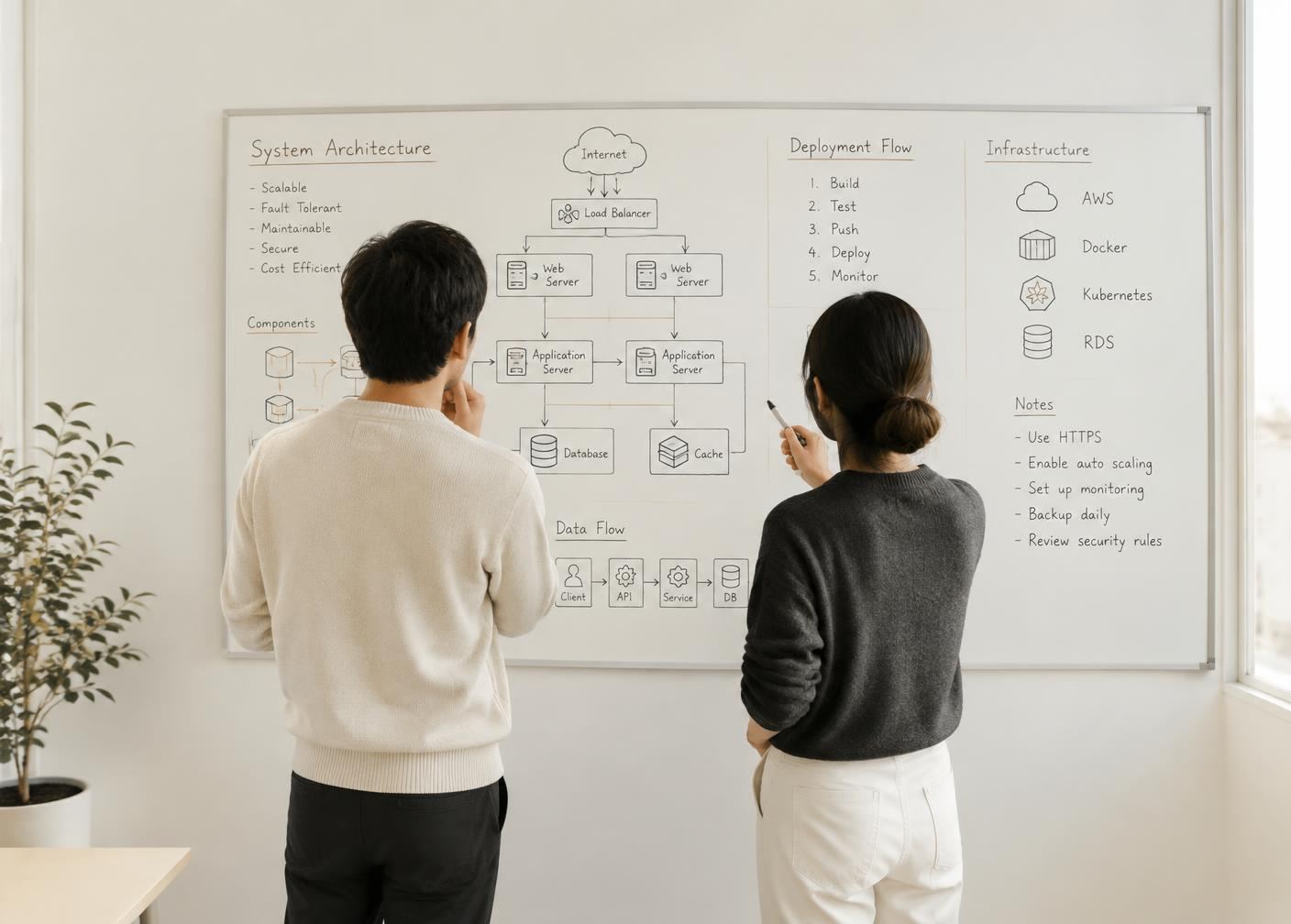
The real cost of software appears after launch. We write code that the next engineer can understand.
Readable code, consistent conventions and automated tests that describe intended behaviour.
Documentation of architecture decisions, environments and operational procedures.
Dependency hygiene and upgrade paths planned rather than deferred indefinitely.